
World Models

1
Schema
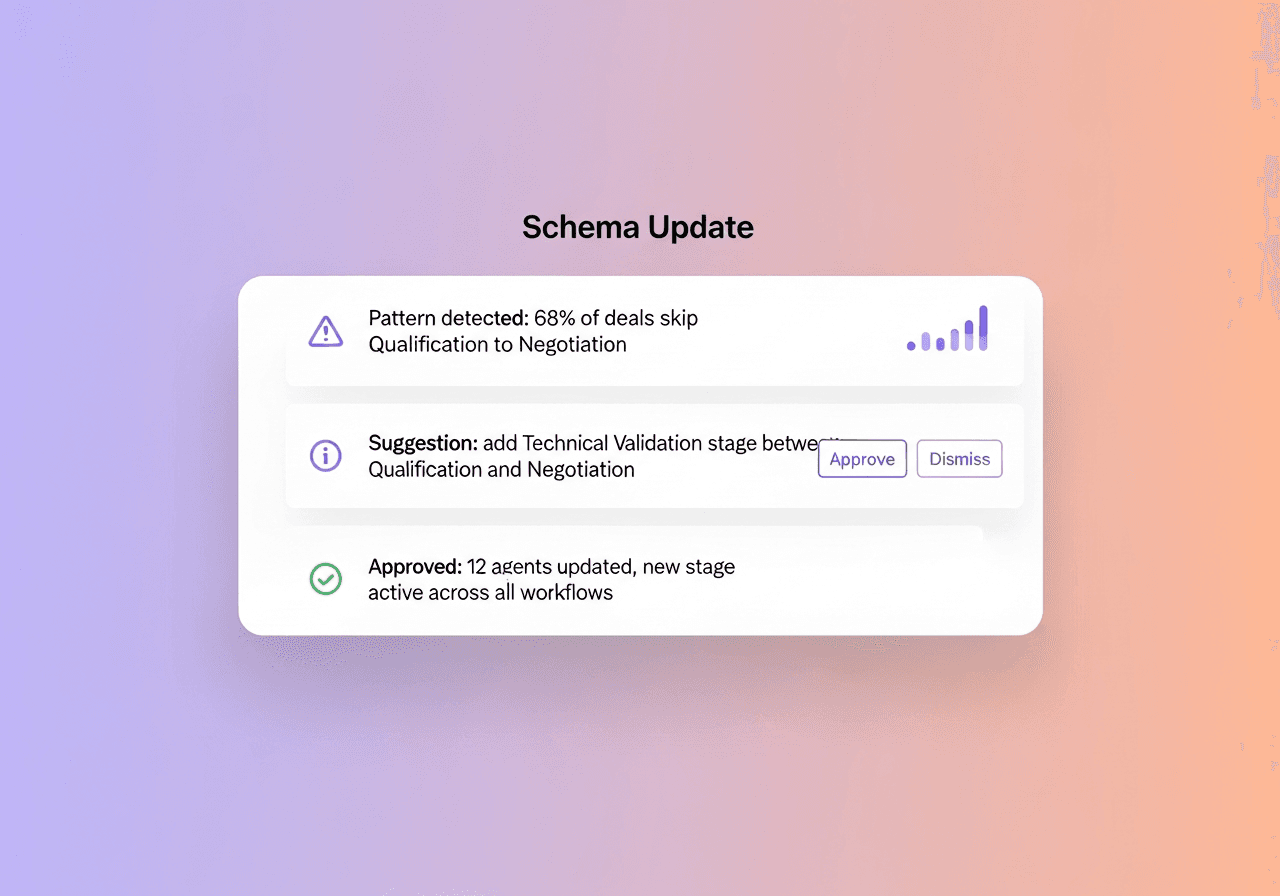
The Revenue Ontology defines the structure — entities, relationships, signal types, campaign objects. The skeleton of the model.
2
Resolution
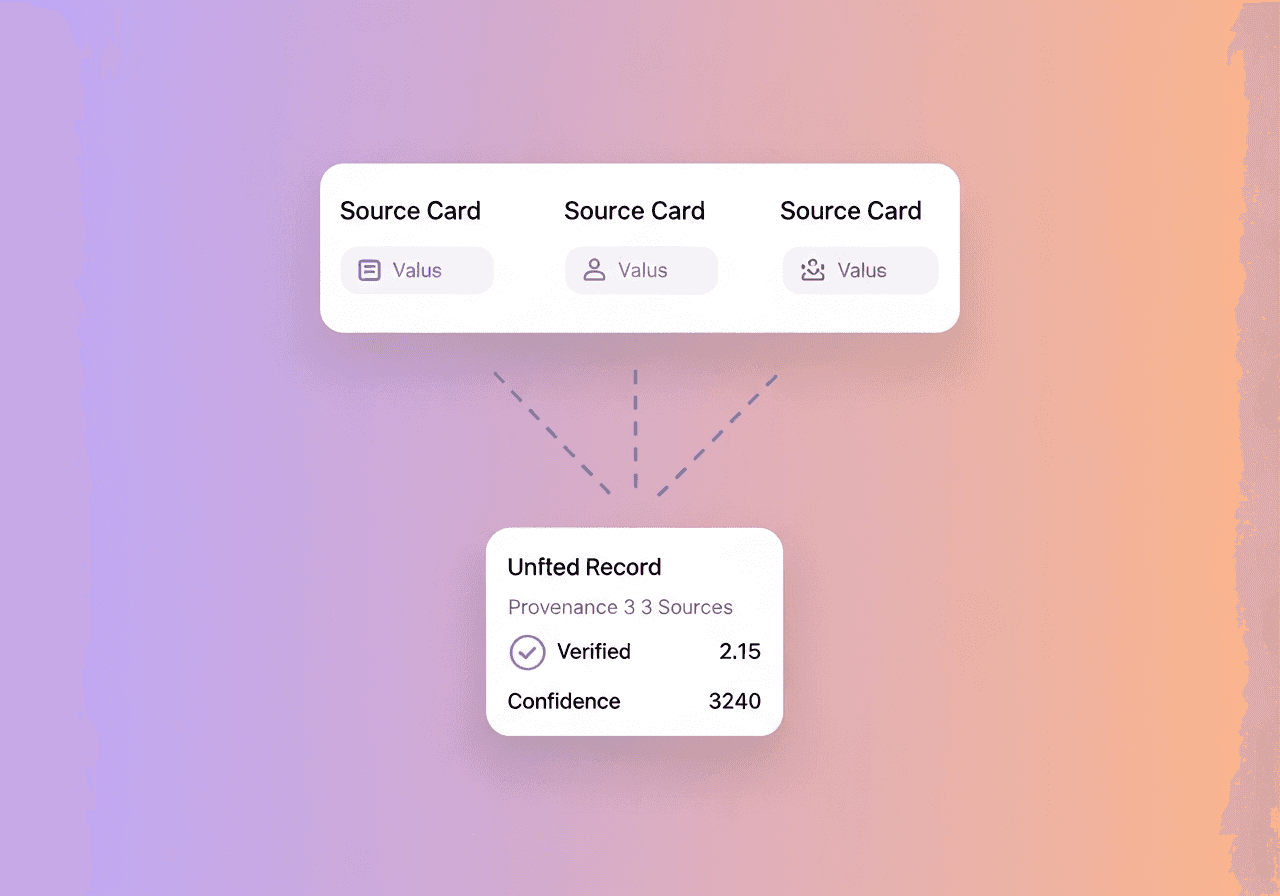
Entity resolution unifies records across every system into canonical identities. Continuous, not batch.
3
Enrichment
The Data Waterfall fills gaps on the market side — firmographics, technographics, contact data, intent — from 150+ providers.
4
Operational ingestion
Campaign data, sequence performance, deal stage progression, call outcomes, win/loss context — all flow into the model attached to the entities they relate to.
5
Graph
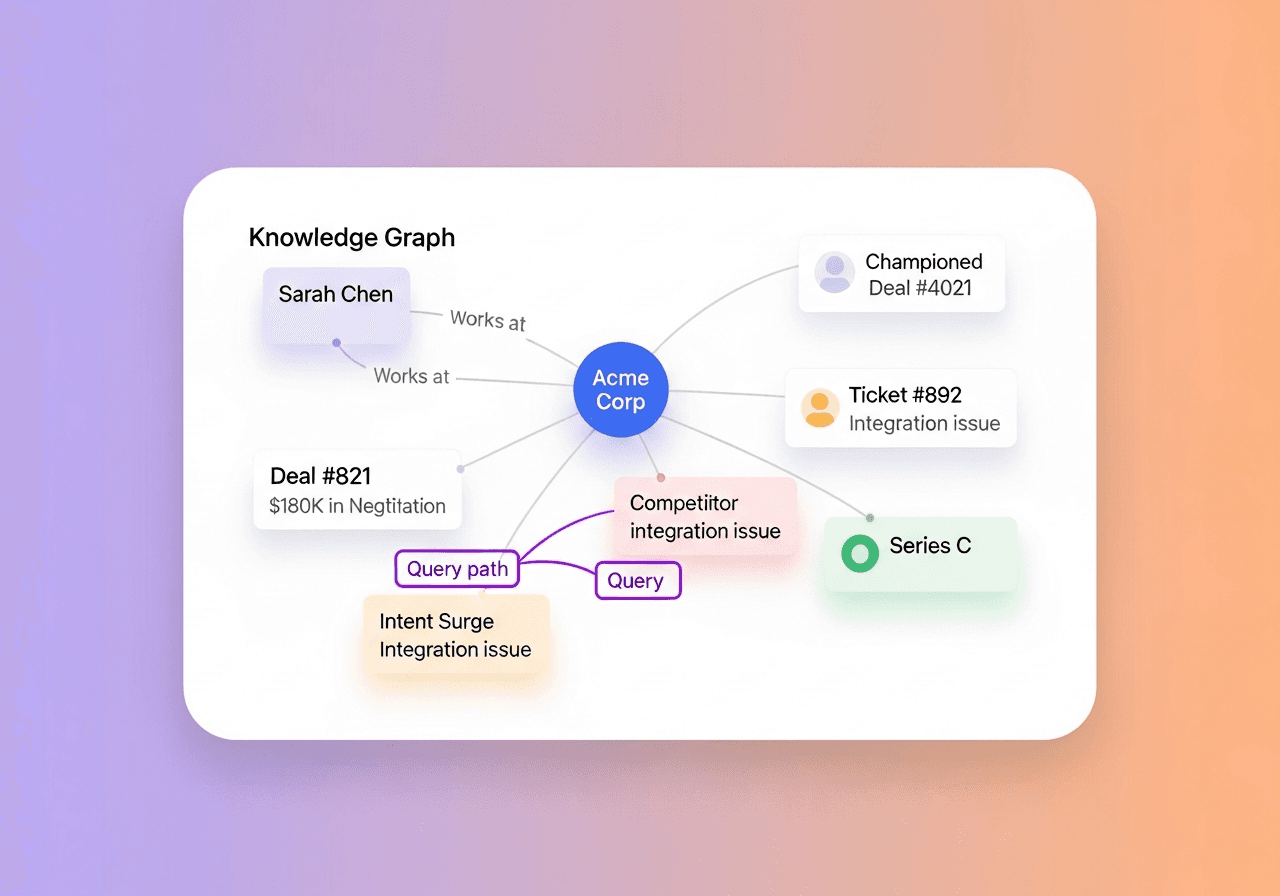
Relationships and outcomes stored as first-class objects. Agents traverse both.
6
Feedback
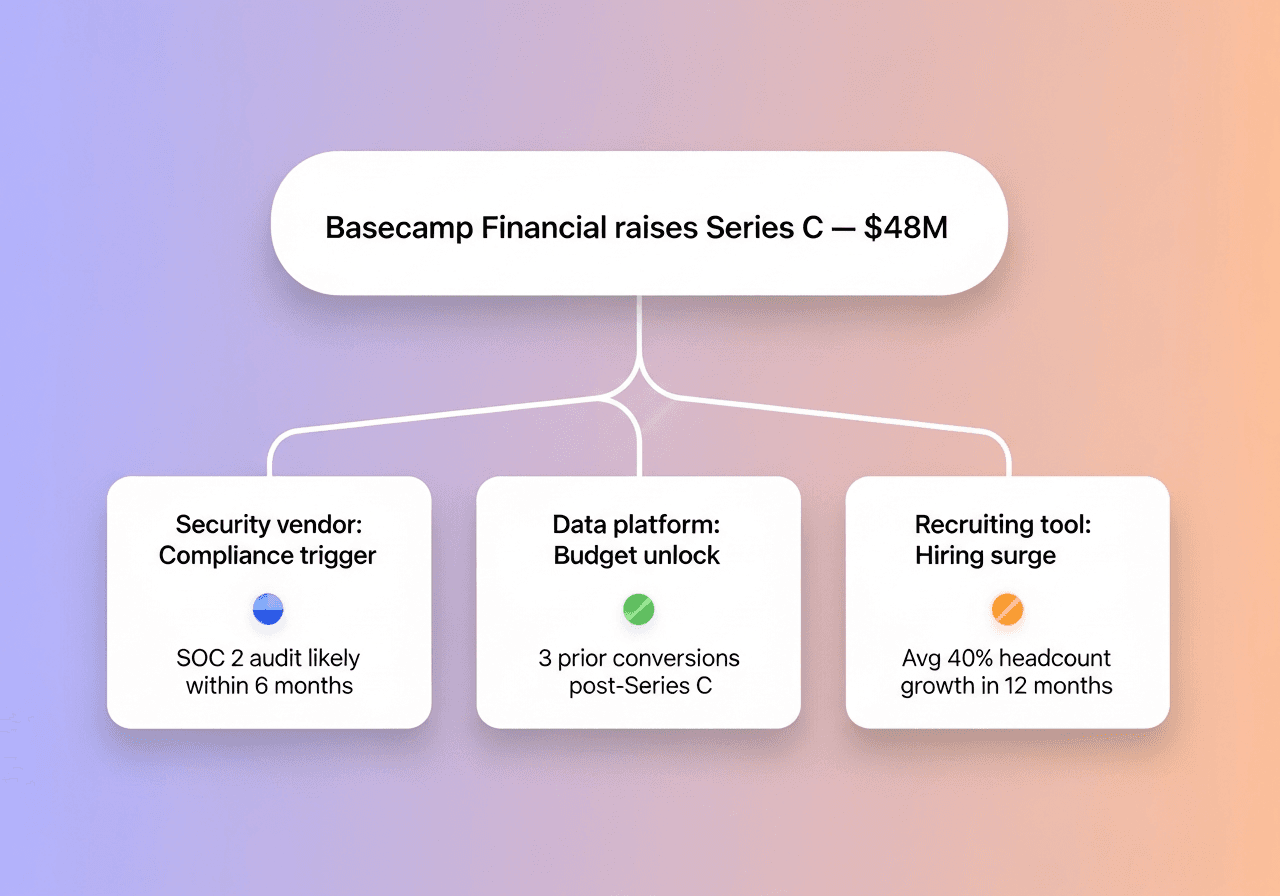
Every outcome updates the model: which patterns convert, which signals predict, which approaches work for which segments.
7
Composition
Agents query the model to compose campaigns informed by market data, relationship context, and operational evidence. Every action draws on accumulated intelligence.
What it models
Market side: companies, people, deals, relationships, signals. Operational side: campaigns, sequences, messaging, outcomes, deal progressions. Both in the same graph.
Entity resolution
Continuous, cross-source. Double-threshold matching with LLM judge. Real-time deduplication, merging, and relationship linking.
Knowledge graph
Entities, relationships, and outcomes as first-class objects. Multi-hop traversal: "Contacts at accounts whose parent company is a customer and where similar profiles converted via VP Ops."
Data sources
CRM, MAP, engagement, product, support, billing, conversation intelligence via native integrations. 150+ third-party providers via the Data Waterfall.
Outcome data
Campaign results, sequence performance, reply rates by segment/persona/messaging, deal velocity, win/loss patterns, churn signals. Fed back continuously.
Compounding
Learns which account profiles convert, which messaging resonates by segment, which signals are predictive vs. noise. Improves per-customer over time.
Query interface
Natural language via agents or structured API. Returns evidence-backed recommendations, not just data.
Data Waterfall
150+ enrichment providers. Sequential routing optimized per segment. The best answer wins. No vendor lock-in.

Agent Engine
Open-source execution engine. Workflows defined in code. Human-in-the-loop checkpoints. Full audit trail on every action.
Revenue Ontology
Every data source normalized into one model. Entity resolution across systems. Relationships stored, not inferred. Schema that evolves with your business.
What is a world model?
How is this different from a data warehouse or CDP?
What operational data feeds the model?
How is this different from the Revenue Ontology?
Does it actually get smarter?
What's the difference between this and analytics?
How long until it's useful?